 What a beautiful exhibition, if we can only have more of them. I feel thirsty to learn about my culture, to learn about the beautiful existing artists and talents in this region I live in. Golden Threads of Bethlehem is an exhibition held by Tiraz in Amman, Jordan, in the name of the vibrant, creative, artistic, cultural legacy and costume industry of Bethlehem, Palestine, during the period of 1880 to 1948.
These threads are threads of Bethlehem, with tales of Palestinian people, with hand work of embroidery by Palestinian woman, made with love and has been cherished and saved by Widad Kawar for long and now are exhibited to tell us that history will remain the story of our lives. As the Tiraz Centre Profile puts it, “Golden Threads is about more than remembering the past: it is an attempt to bring a tradition to life. It is a visual-historical reference point to what Bethlehem and Palestine once were and, one day, will become again.”
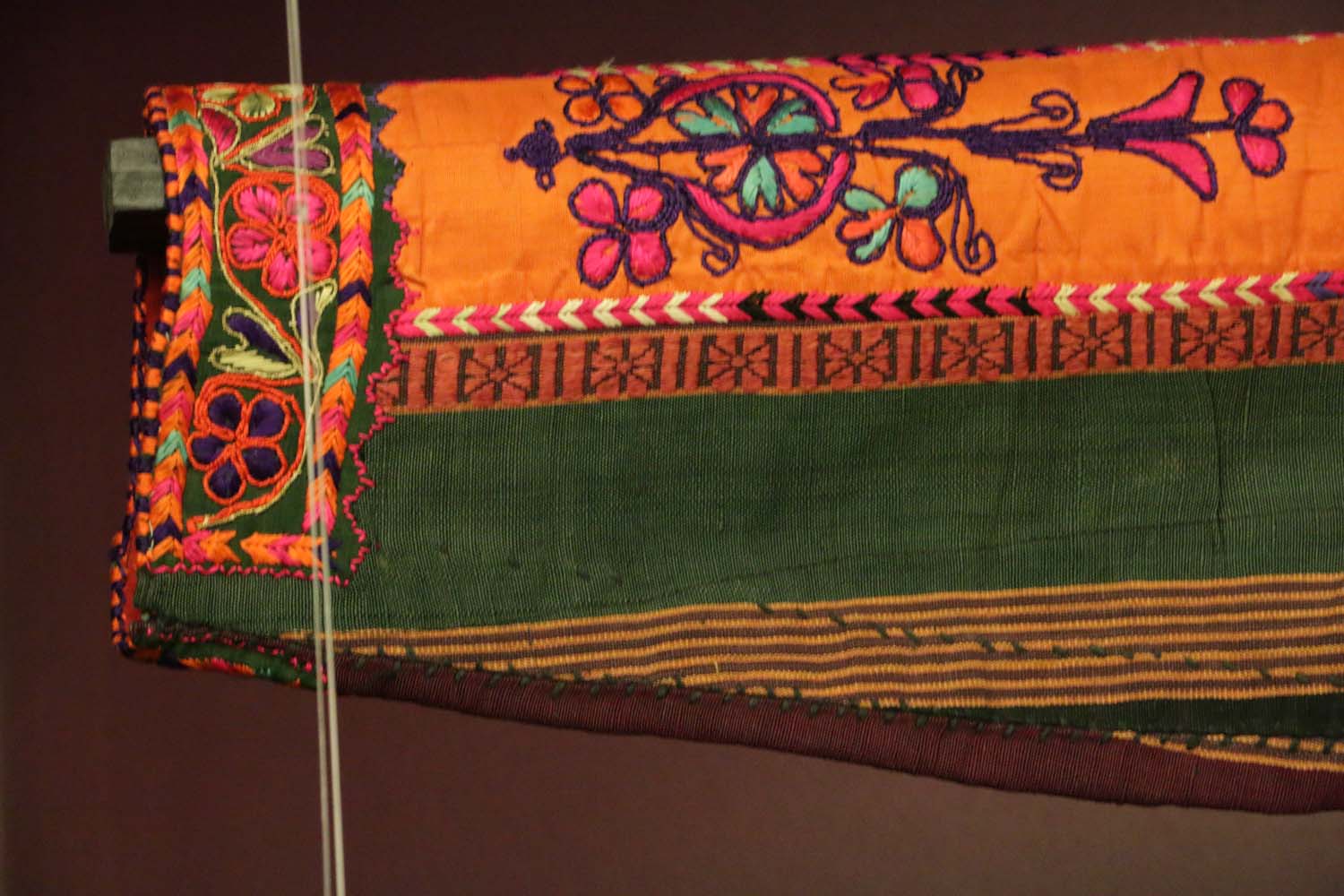
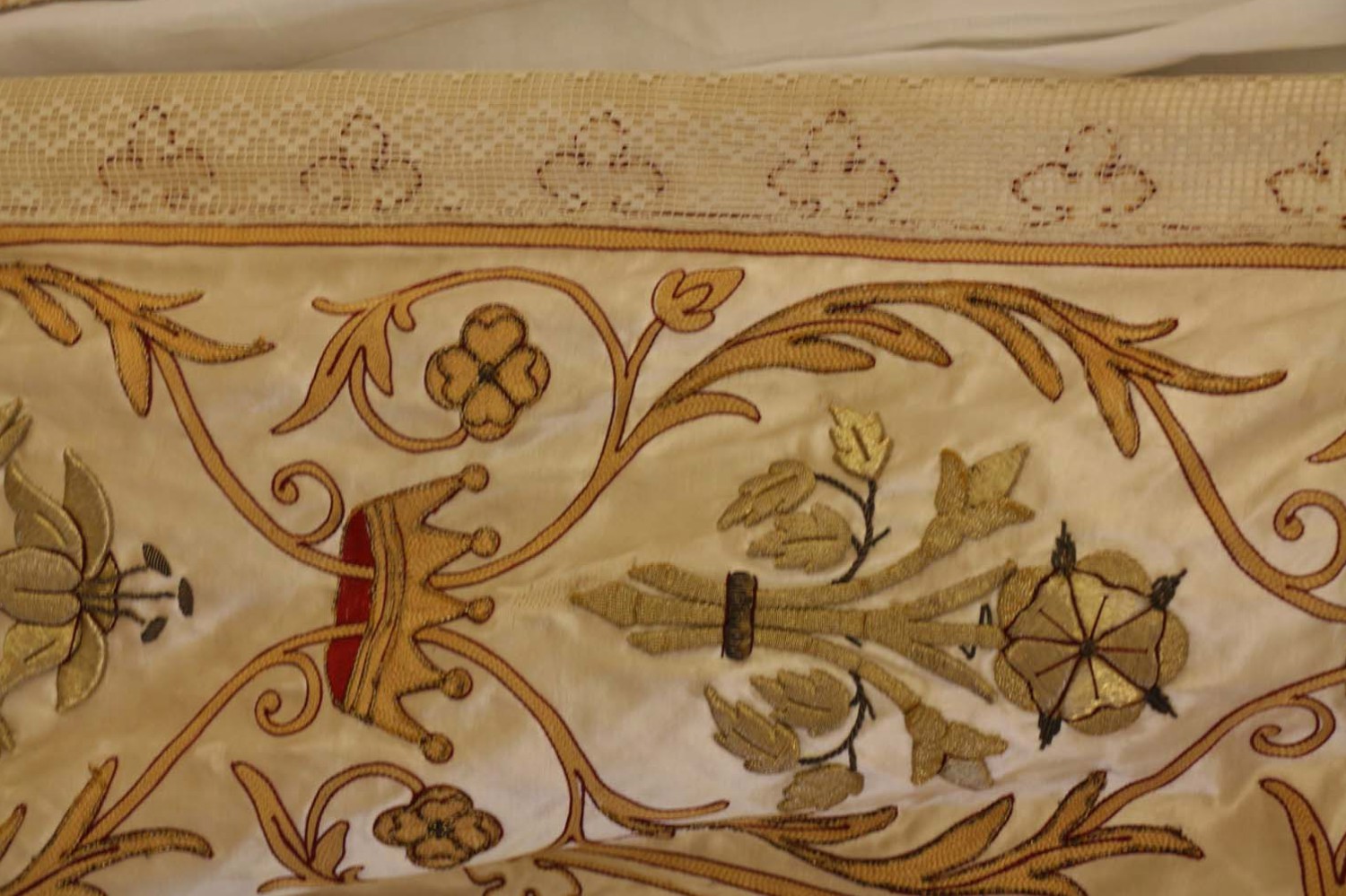
What I loved the most about the exhibition, is the colors, the fabric, the embroidery of each piece displayed. They are more than breathtaking, pieces of art, historic hand-made poetry. Each drawing is a symbol, each pattern is a story, every color has a tale, this is Palestinian haute couture, made by Palestinian women writing stories for woman to carry around. 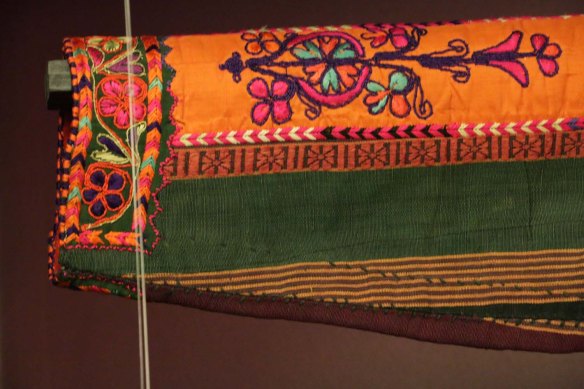

Golden Threads of Bethlehem
“Before the 1967 occupation, any traveler to Bethlehem would first have been struck by the rainbow-colours of the women’s costumes. In Bethlehem, the typical costume was called “Malak” meaning “Royal, Angel, Queen” described as the “Queen of Dresses” in Palestine. The women of Bethlehem set the fashion trends for village women in the towns of Beit Jala, Beit Sahour, Ein Karem, Malha, Artes, Silwan. Lifta and among others who often wore the malak as their wedding dress. Their versions were often heavily embroidered.” (From the Golden Threads of Bethlehem Exhibition Booklet with minor edits.)
“One of the most famous weaving factories belonged to the Naser family. Ibrahim Naser established in 1892. The factory also produced green stripped “ikhdari” fabric and burgundy “jiljili” cloth. Wollen cloth “Abaya” for men were woven in stripes of natural colors off-white, brown, and black. The first velvet “Malak” costume to be introduced to the market in 1928 when Najib the son of Ibrahim sent a piece of the Malak fabric to Krefeld, Germany to have its striped design reproduced in velvet.” (From the Golden Threads of Bethlehem Exhibition Booklet with minor edits.)
The “Malak Dress” is a dress fit for a queen as Tiraz puts it in display and words. The malak dress is a masterpiece, it was custom to get married in this dress, and some women asked to be buried with it and therefore most of the dresses are lost. The main form of embroidery used is the “tahriry” or what is known as the “couching stitch”, and the thread used is usually silk or gold cord. The space between the stitch is usually filled with satin stitch in many colors of silk thread.
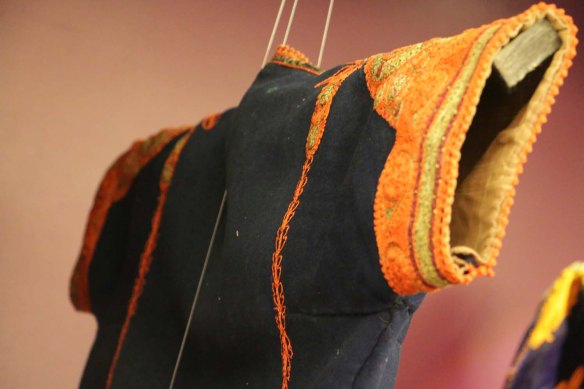
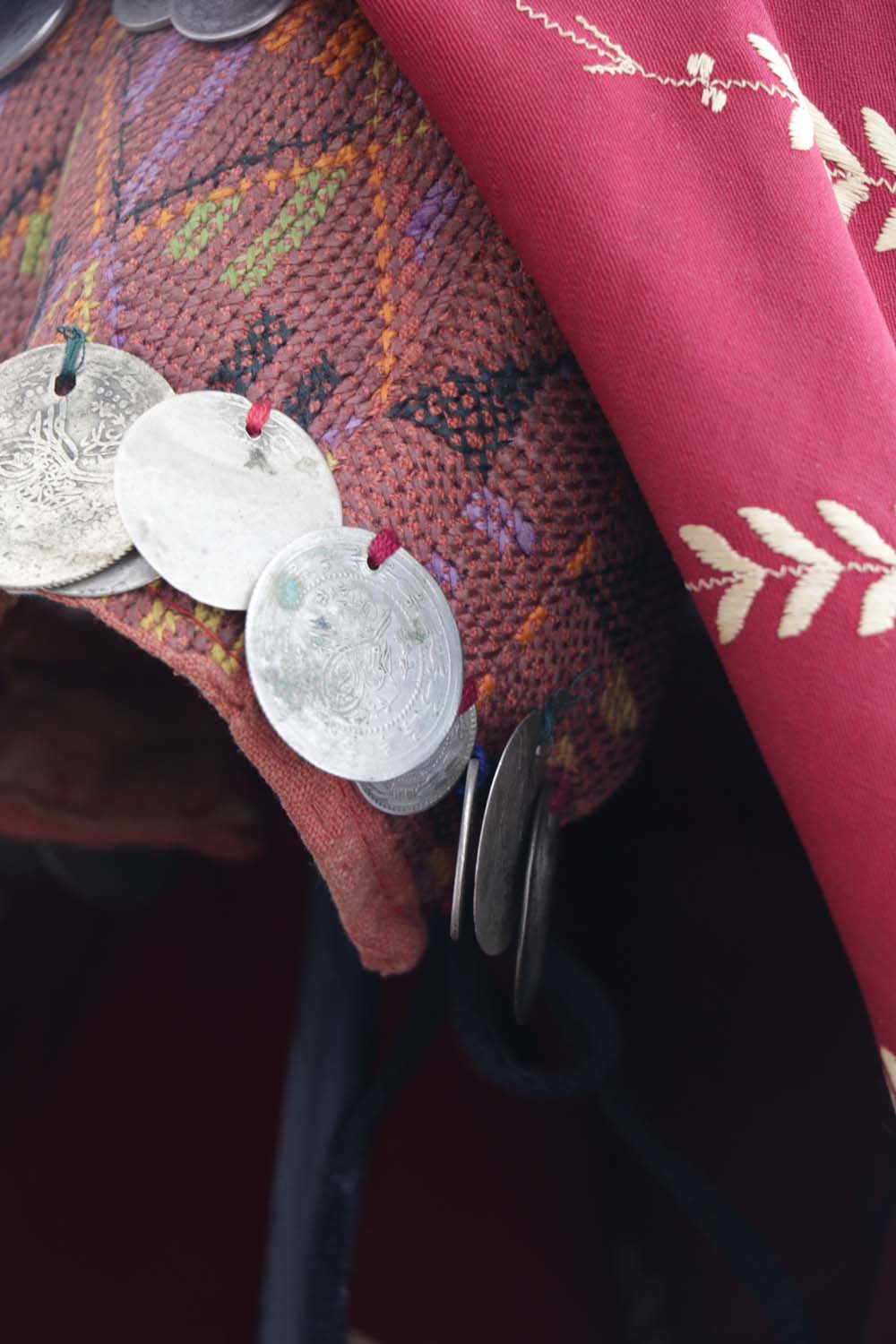
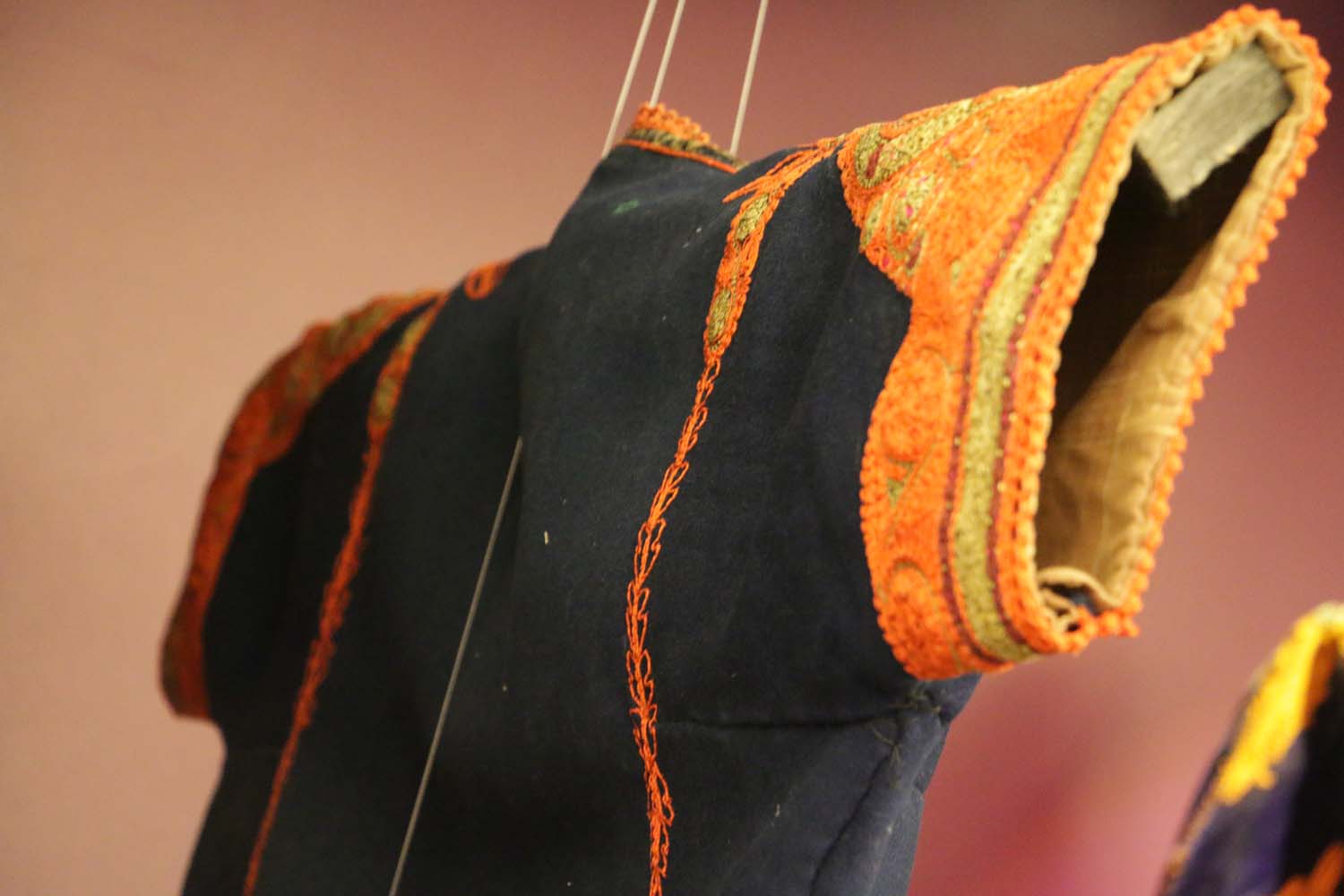
The head-piece is called “Shatweh” which is also called the woman’s crown in Bethlehem. Made with red or green felt and decorated with embroidery and coins. It was also only worn by married women. (The picture below is of Embroidered traditional bridal headdress from Beit Dajan with Ottoman coins called weqayeh)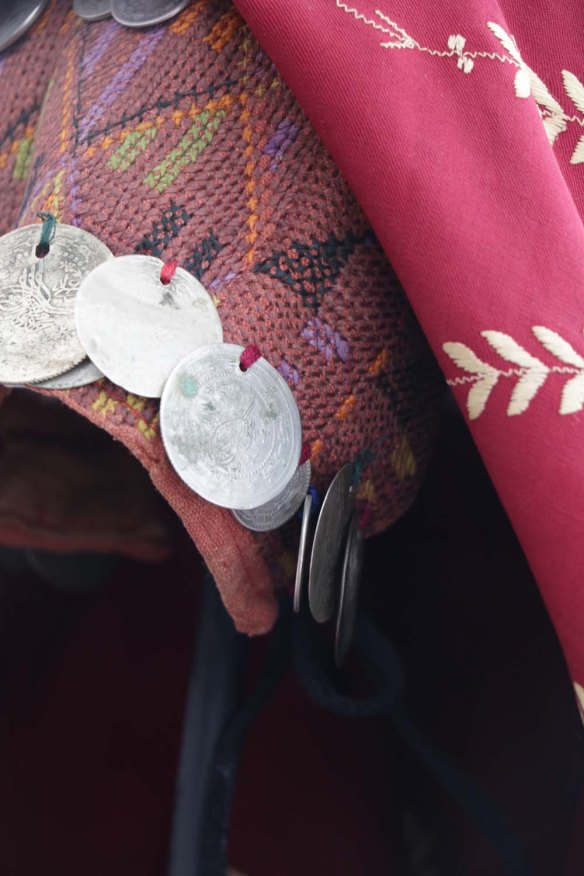 The mini jacket is called “Taksiri” which the women would wear over the malak dress. The dress is usually made using felt or velvet fabric and embroidered in silk thread or gold cord.
  Bethlehem Birthplace of Jesus, destroyed then rebuilt by the Romans, and subjected to the Arab, Ottoman, and British rule, the eternal town of Bethlehem has been a place of pilgrimage and importance for Christians, Muslims and Jews for many centuries. For Palestinians in particular, it is a homeland which recalls memories of a more peaceful and gentle time. Despite the fall of the Ottoman Empire and Balfour declaration in 1917, day-to-day life continued in Palestine much as it was before. Few then understood the chain of events that would result in the 1948 war and the forced exodus of over 700,000 Palestinians from their land, and the placement of the city under occupation.
 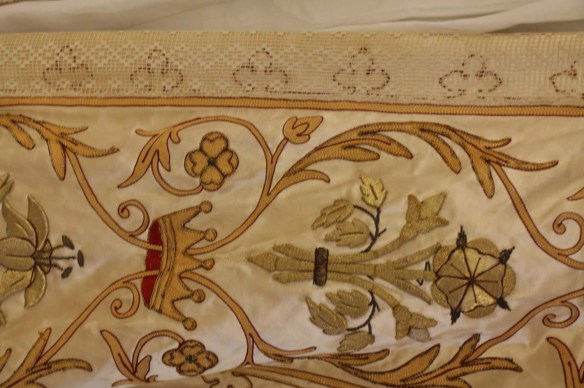 Today, and thanks to Widad Kawar, and to all her supporters and sponsors, what was her dream, and the dream of many Palestinians has now been turned into Tiraz. A new home for Widad Kawar’s collection of traditional Arab dresses. Widad started her collection out of passion to preserve a disappearing rich textile and embroidery heritage in her homeland Palestine, and extended it to Jordan and other Arab countries with pieces from the 19th and 20th centuries. Today she has over 2000 costumes and weavings set aside at Tiraz Center not to mention the total number she has stored.
If you are anywhere in Jordan, or close by, and have the chance to visit exhibitions, then i recommend you take that chance to go and visit the open exhibition of “The Golden Threads of Bethlehem“. The exhibition will be running until March 28th 2015. When I went, there were also other beautiful items from local oriental designers like Khordda, Al Burgan Handcrafts, and Inamullumani.

Inamullumani

Khurda

AlBurgan Handicrafts
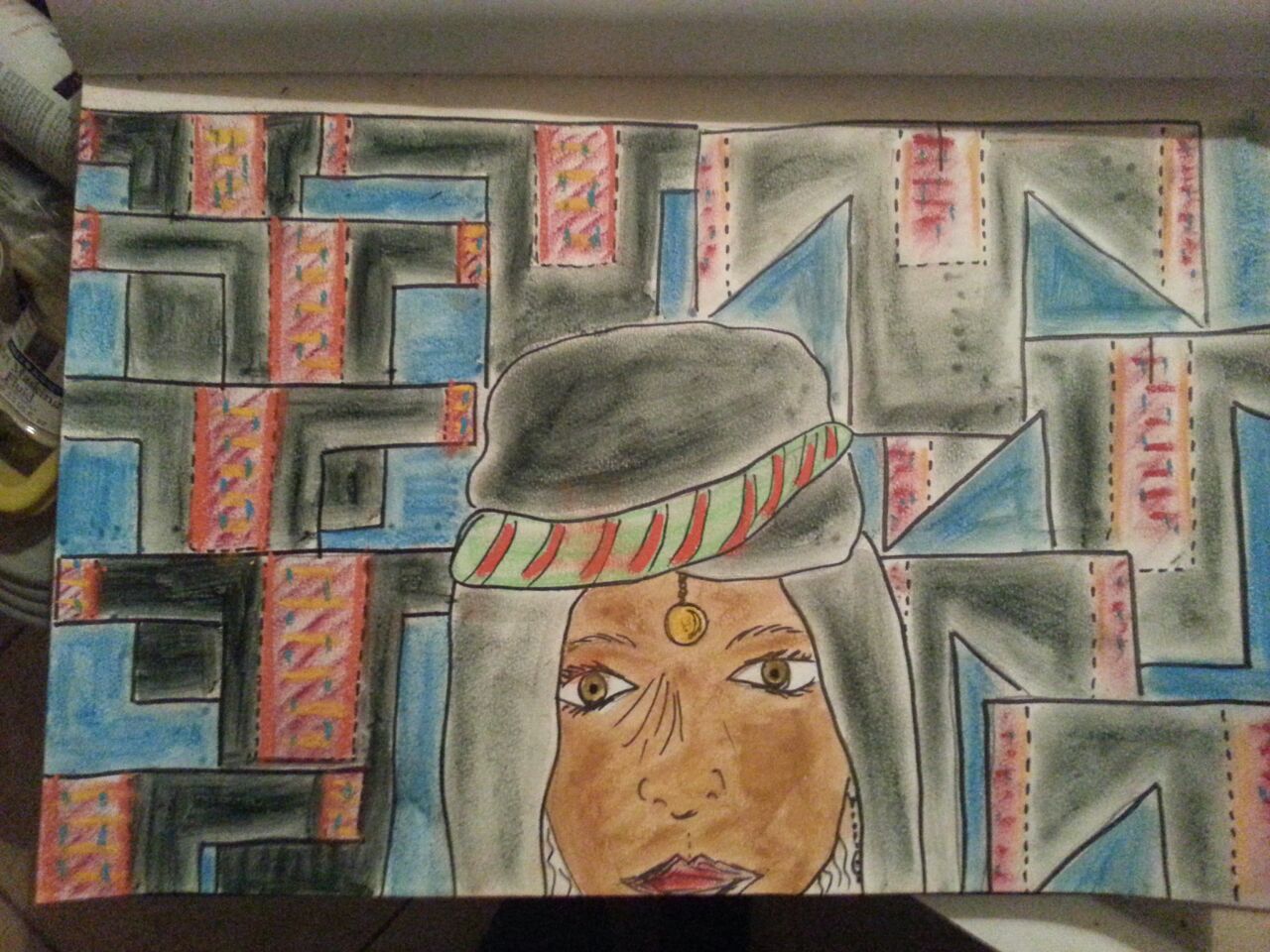
All pictures were taken using my all time favorite Canon 70D, information in this post are all from the Tiraz Center Profile. 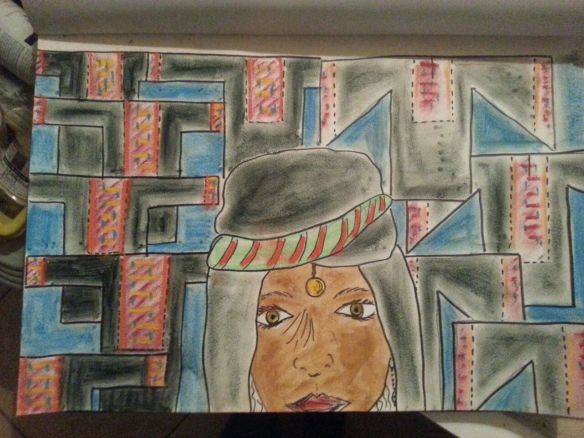 This drawing was made by Linda Kilani after her visit to the exhibition.














 Razan Masri